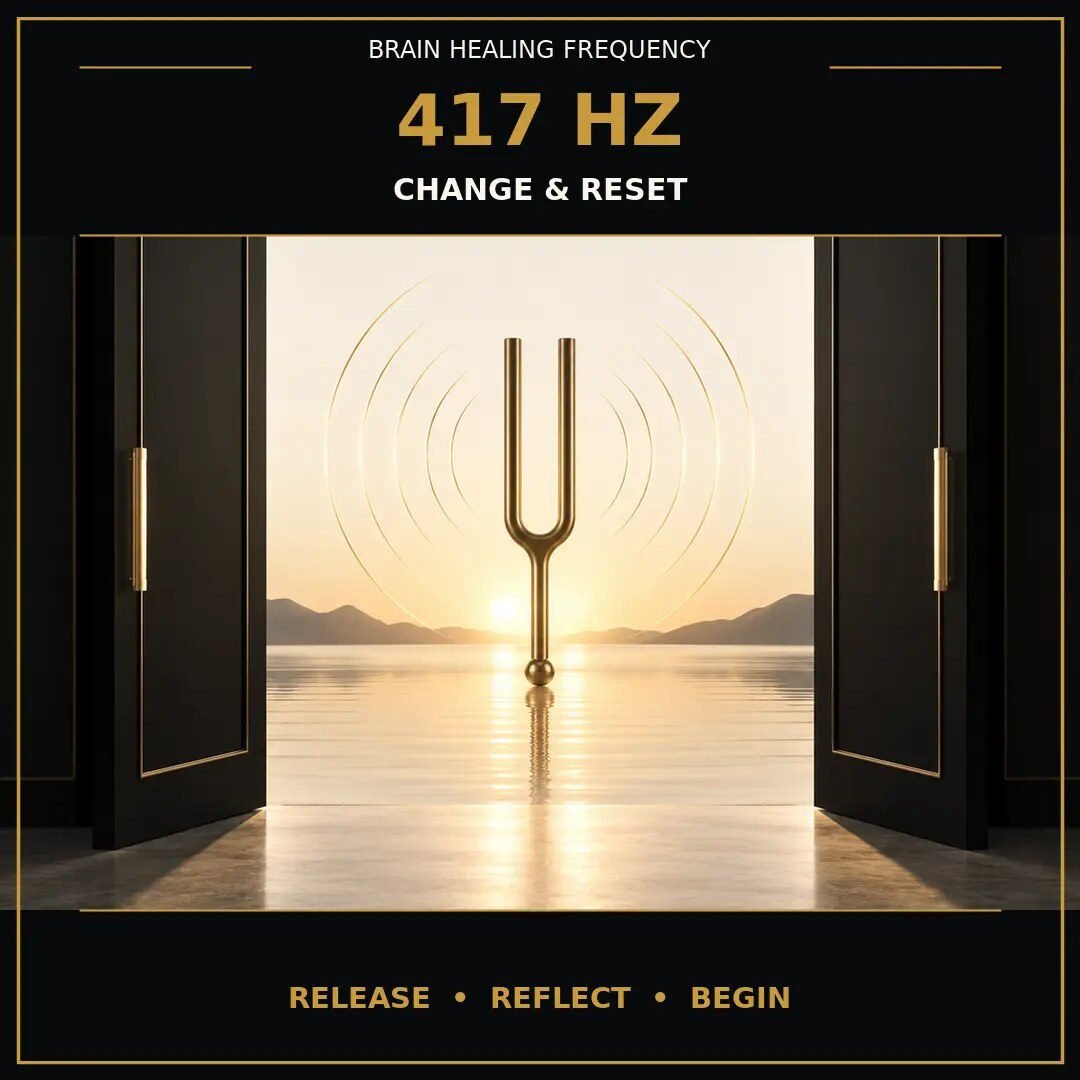
417 Hz is a tone in the modern Solfeggio frequency set, traditionally associated with change, fresh starts and releasing unhelpful patterns. Many people use 417 Hz music as a background for meditation, journaling or a quiet reset. However, there is no strong clinical evidence that this exact frequency can erase trauma, repair DNA or produce a guaranteed emotional transformation.
The most sensible way to use 417 Hz is as a gentle listening cue: let the sound mark a period in which you slow down, breathe and decide what you want to change. The practice may feel calming or meaningful, but it should complement—not replace—appropriate medical or mental-health care.
417 Hz frequency at a glance
| Question | Practical answer |
|---|---|
| What is 417 Hz? | A sound wave vibrating 417 times per second and a tone used in modern Solfeggio music. |
| What is it traditionally used for? | Change, emotional release, new beginnings and interrupting old patterns. |
| What does research prove? | Research supports possible benefits from music and relaxation practices in general, not special healing effects unique to 417 Hz. |
| How long should you listen? | Start with 10–20 minutes at a comfortable volume. Consistency matters more than forcing a long session. |
| Are headphones necessary? | No. Headphones can provide privacy and detail, but speakers work too. |
What is the 417 Hz frequency?
Hertz, abbreviated Hz, measures cycles per second. A pure 417 Hz tone completes 417 cycles every second. Most “417 Hz music” is not a single uninterrupted tone; it is usually ambient music, nature sounds or meditation music tuned around or layered with that frequency.
417 Hz appears in a popular modern set called the Solfeggio frequencies. Within contemporary wellness traditions, it is commonly connected with transformation and clearing the emotional residue of past experiences. These associations are spiritual or symbolic traditions rather than established medical properties of the number 417.
Commonly discussed 417 Hz benefits
Listeners often choose 417 Hz when they want to create a deliberate transition between an old state and a new one. The following are better understood as possible listening experiences, not guaranteed health outcomes.
1. A mental cue for change
Repeating the same sound at the beginning of a reflection practice can become a useful cue. Over time, hearing it may remind you to stop reacting automatically and consider a different response. The benefit comes from the complete ritual—attention, breathing, expectation and repetition—not necessarily from a special biological effect of 417 Hz.
2. A calmer setting for journaling
Soft, predictable audio can make an environment feel less distracting. This can help some people stay with a journal prompt long enough to identify a repeated thought, habit or emotional trigger.
3. Support for meditation and slow breathing
Music can make a short meditation feel more approachable. If 417 Hz music helps you lengthen your exhale and relax your shoulders, it may support the ordinary calming effects of slow breathing and focused attention.
4. A symbolic “fresh start” ritual
Symbolism can be useful even when it is not a medical treatment. You might listen after finishing a difficult day, before beginning a new project, or while deciding which habit to leave behind. The tone gives the moment a clear boundary.
5. Temporary relief from mental noise
Some listeners find a steady sound easier to focus on than silence. Others may find it irritating. Your response is personal, and a neutral soundscape, breath practice or different frequency may suit you better.
What does science actually say?
Scientific research has examined music-based interventions, meditation and sound in broad terms. The U.S. National Center for Complementary and Integrative Health notes that music-based interventions have shown potential for symptoms such as anxiety, pain and emotional distress in some settings, while evidence quality and results vary by condition.
That broader research does not demonstrate that 417 Hz itself removes negative energy, heals trauma, changes cells or “cleanses” the subconscious. Studies of music also examine much more than pitch: rhythm, melody, personal preference, volume, context and the relationship with a trained therapist can all affect the experience.
A fair conclusion is that 417 Hz music can be used as a relaxation or reflection tool if you enjoy it. Claims of a precise medical effect should be treated cautiously.
A simple 15-minute 417 Hz reset
- Choose one transition. Name something specific: “I want to stop checking my phone during focused work,” rather than “I want to change my life.”
- Set a comfortable volume. The audio should sit in the background; it should not feel sharp, intense or overwhelming.
- Breathe for two minutes. Let your exhale be slightly longer than your inhale without straining.
- Listen for eight minutes. When your attention wanders, return to the sound and the physical sensation of breathing.
- Write for three minutes. Ask: “What keeps this pattern going?” and “What is one different action I can take today?”
- Close with one action. Do something small and observable within the next 24 hours.
This routine avoids asking the sound to do the work for you. Instead, it uses the sound to support attention while you choose a practical next step.
How long and how often should you listen?
There is no scientifically established “correct dose” of 417 Hz. Begin with 10–20 minutes, three or four times in a week, and notice how you respond. A short session you genuinely repeat is more useful than forcing an hour because a video title promises faster results.
If you become restless, develop a headache or notice ringing in your ears, lower the volume or stop. Listening overnight is not necessary. If you do use audio at bedtime, use a sleep timer and keep it very quiet.
Do you need headphones?
No. Ordinary speakers are suitable for 417 Hz meditation music. Headphones may help when your environment is noisy, but they should never be used at an uncomfortable level. The World Health Organization recommends keeping personal-device volume below 60% of maximum and limiting exposure to loud sound.
417 Hz compared with other frequencies
- 417 Hz: traditionally chosen for change, reflection and new beginnings.
- 222 Hz: often used for themes of harmony, patience and relationships.
- 384 Hz: used on this site as a focus ritual for beginning delayed tasks.
- 512 Hz: commonly selected as a gentle background for winding down.
The “best” frequency is the one that supports the behaviour you actually want: breathing slowly, meditating, beginning work or preparing for sleep. If the sound distracts you, choose another track rather than assuming you are listening incorrectly.
Who should be cautious?
Do not listen while driving or doing work that requires full awareness if the audio makes you drowsy. People with tinnitus, sound sensitivity, migraines or hearing concerns may prefer speakers, shorter sessions or no tonal audio. Stop if the sound causes discomfort.
417 Hz audio is not a treatment for trauma, depression, anxiety disorders or any medical condition. If difficult memories or symptoms interfere with daily life, seek support from a qualified health professional.
Frequently asked questions
Can 417 Hz remove negative energy?
“Negative energy” is a spiritual description, not a medical diagnosis. Some people use the tone symbolically while cleaning a room, meditating or letting go of a difficult day. There is no scientific test showing that 417 Hz removes an external energy.
Can 417 Hz heal trauma?
No exact tone has been shown to heal trauma. Music may support relaxation, but trauma recovery often needs safe, evidence-based care and should not be reduced to a frequency claim.
Can I listen while sleeping?
You can use quiet audio with a timer if it helps you wind down, but overnight listening is not required. Protect sleep quality and hearing by keeping the sound low.
What should I think about while listening?
Use one grounded prompt: “What pattern am I ready to interrupt, and what small action would prove that change has begun?”

Affiliate note: This page may contain sponsored links. If you buy through them, we may earn a commission at no extra cost to you.
The takeaway
417 Hz is best approached as a personal meditation and transition cue. Its traditional meaning may make a reflection ritual feel purposeful, while the calming effects can come from music, breathing and focused attention together. Use it gently, stay realistic about the evidence, and connect every listening session with one practical action.
Sources and further reading
- National Center for Complementary and Integrative Health: Music and Health
- NCCIH: Meditation and Mindfulness—Effectiveness and Safety
- World Health Organization: Safe Listening
This article is for educational purposes and is not medical advice. Sound-based practices should complement, not replace, professional care.